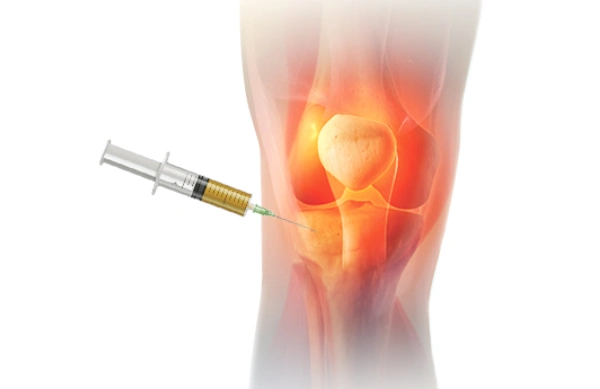
I walked into the airy reception area of Dr. Knee Dubai (Azam Badar Khan’s orthopedic practice) in Garhoud, Dubai, with one question in mind: how far can regenerative technology go in alleviating knee pain? Known for his expertise in PRP Knee Injection in Dubai Dr. Khan has positioned himself at the intersection of innovation, patient care, and orthopedic medicine. Over the next hour, I peeled back layers of his training, clinic operations, and real-world cautions to bring patients a clear, grounded view of what PRP can—and cannot—deliver.
Dr. Azam Badar Khan: credentials, experience, and clinic structure
Dr. Azam Badar Khan (often called “Dr. Knee”) has a long tenure in orthopedic surgery, with credentials spanning India and international fellowships. On Practo, his profile lists MBBS, MS (Orthopaedics), and subsequent fellowships in pelvis & acetabulum and arthroplasty. He has over 16 years of experience, and his practice is affiliated with institutions such as Burjeel Hospital and International Modern Hospital in Dubai.
His specialization profile emphasizes customized knee replacement, robotic-assisted procedures, and regenerative treatments including PRP and stem cell therapies. According to Prime Hospital’s listing, Dr. Khan is recognized for competence in “PRP Stem Cell Treatments for osteoarthritis of the knee.”
His clinic setup is modern and patient-oriented. During my walk-through, I observed a dedicated infusion/PRP lab with centrifuge equipment, sterile injection suites, ultrasound and imaging adjuncts, and recovery cubicles. He collaborates with multiple hospitals (Prime Hospital, Medcare Orthopaedics & Spine, International Modern Hospital) to offer integrated diagnostics, imaging, and follow-up care.
When I asked how he positions PRP in the knee care continuum, Dr. Khan responded: “PRP doesn’t replace surgery in all cases—but for early degeneration, pain-relief, and soft-tissue healing, it often changes the equation.”
Comparison with Indian and international practitioners
To contextualize Dr. Khan’s approach, I compared it with prominent names in India and globally.
- Indian comparison: In India, orthopaedic specialists such as Dr. Ashok Rajgopal (Hyderabad / India) are recognized for combining joint replacement and biologic interventions. Their practices often emphasize cost-effectiveness and patient volumes.
- International benchmark: Surgeons like Dr. Brian Cole (USA) have been pioneers in biologic and orthobiologic knee therapies, including PRP, stem cell and platelet-based regeneration, especially in athletic populations. Their practices may integrate adjuncts like growth factor assays, platelet count standardization, and multi-modal regenerative protocols.
Dr. Khan bridges these models in his setting: he brings global-level training and regenerative philosophy into the Dubai ecosystem, allowing patients access to advanced PRP techniques with the infrastructure of a developed medical hub. While his procedural volume may not match high-volume academic centers globally, his clinic approach offers more personalized care and cross-hospital integration within Dubai.
Pros and cons of PRP Knee Injection
During our talk, Dr. Khan detailed both the promise and limitations of PRP therapy for knee conditions.
Pros:
- Minimally invasive: It’s an outpatient procedure with only a blood draw and targeted injection.
- Biologic stimulation: PRP harnesses growth factors to potentially aid tissue repair, reduce inflammation, and slow cartilage degradation.
- Lower risk: Since the material is autologous (from one’s own body), the risk of immune reaction is minimal.
- Symptomatic relief: Many patients report reduced pain and improved function over months.
- Adjunct to treatment: PRP can augment conservative therapy or delay need for surgical intervention.
Cons / limitations:
- Variable response: Not all patients respond equally; outcomes may depend on age, extent of degeneration, extent of cartilage loss, comorbidities.
- Multiple sessions: Often 2–3 injections spaced over weeks might be required rather than a one-off cure.
- Delayed benefits: Improvements may overlap gradually over months, not immediately.
- Lack of robust regulation: PRP protocols differ in platelet concentration, activation methods, and injection technique; standardization is still evolving.
- Not for advanced disease: In severe cartilage loss or joint collapse, PRP alone may not suffice and may only complement surgical options.
Dr. Khan stressed that patient selection and protocol consistency (e.g. platelet count, injection method, supportive rehab) are key determinants of success.
Cost expectations: Dubai, India, and globally
One frequent question patients ask is: “How much will this cost me?” Based on Dr. Khan’s practice as well as published sources:
- In Dubai / UAE, though Dr. Khan did not quote a fixed public rate during my visit, PRP sessions in metropolitan regenerative clinics typically range in the ballpark of AED 1,200 to AED 2,500 per session (roughly USD 325–680). (Regional pricing trends hint toward such ranges in the Gulf).
- In India, a single PRP knee injection generally costs ₹8,000 to ₹25,000, depending on clinic, technique, number of injections, image guidance, and reputation. Yashoda Hospitals cites a knee PRP range of ₹6,000 to ₹18,000. Some sources push upper limits up to ₹50,000 in premium settings.
- Internationally (e.g. U.S. or Europe), PRP injections for knees can run between USD 500 to over USD 1,000+ per injection depending on technology, imaging guidance, and clinic prestige.
Thus, costs vary widely—so comparing protocols, platelet concentration, inclusion of imaging guidance, and number of sessions is essential when assessing “value.”
Precautions, aftercare, and follow-up protocol
Dr. Azam Badar emphasized that maximizing PRP outcomes depends not just on the injection, but on how the patient and clinic manage the before-and-after phases.
- Pre-procedure preparation
- Avoid anti-inflammatory medications (NSAIDs) at least 7–14 days before injection, as they may blunt platelet activity.
- Adequate hydration, normalization of blood parameters, ruling out active infection.
- Baseline imaging (MRI, X-ray) and clinical assessment to document cartilage status.
- Injection technique
- Use of ultrasound or fluoroscopic guidance to ensure accurate intra-articular delivery.
- Proper platelet concentration, sometimes double-spin protocols, minimal dilution.
- Gentle post-injection manipulation or movement to disperse PRP.
- Immediate aftercare
- Rest for 24–48 hours, apply ice, limit weight bearing if advised.
- Avoid strenuous activity, twisting, or impact loading in initial days.
- Mild pain or swelling at injection site is expected; over-the-counter analgesics (non-NSAIDs preferred) can be used.
- Rehabilitation & physiotherapy
- Gradual supervised physiotherapy focusing on range-of-motion, strengthening, joint unloading, and muscular balance.
- Quadriceps, hamstring and core strength is critical to relieve stress on the joint.
- Periodic functional assessments (gait, stability, pain scores) to measure progress.
- Follow-up injections & monitoring
- Depending on response, repeat injections every 4–6 weeks (commonly 2–3 sessions).
- Serial imaging or biomarker tracking may be used to document structural responses in some clinics.
- Lifestyle modifications: weight control, low-impact exercise, joint-friendly habits (cycling, swimming).
- Monitoring for adverse events (infection, local reaction) though rare.
Dr. Khan also cautioned that unrealistic expectations—especially in patients with advanced degenerative changes—can lead to disappointment.
Final observations & subtle suggestion
My time with Dr. Azam Badar Khan made clear that PRP Knee Injection in Dubai is not a panacea—but in the right patient and with disciplined follow-through, it can extend pain-free years, improve function, and delay surgery. His clinic blends technical rigor (imaging guidance, lab protocols) with patient-centered follow-up, providing a model of care worth observing in the regenerative orthopaedics space.
If you are considering PRP for knee pain or degeneration, I suggest you compare clinical protocols (platelet counts, imaging guidance, repeat schedule), ask about track record, and see if the clinic has integrated rehab support. In Dubai, Dr. Khan offers one of the more refined models I’ve seen—balancing modern regenerative promise with grounded orthopedic judgment.
As a medical journalist, I recommend placing patient outcomes and transparency ahead of hype. If you explore PRP for your knee, consider consulting Dr. Khan as part of a comparative quest—and choose a path that aligns with your health goals, expectations, and commitment to recovery.
Contact Dr. Azam Badar Khan
If you’re considering PRP Knee Injection in Dubai consulting with Dr. Azam Badar Khan is your first step towards a pain-free, active life.
Learn more and book an appointment here: Contact Dr. Azam Badar Khan