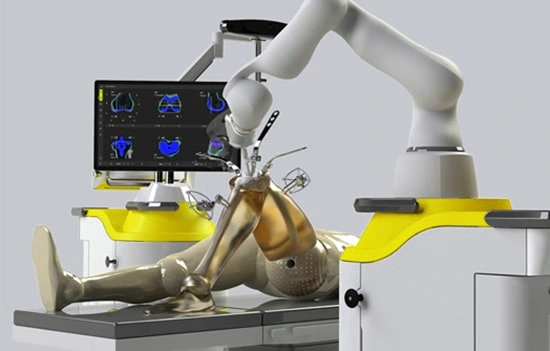
As a medical journalist always in pursuit of firsthand insights into cutting-edge treatments, I recently visited Opera Bone and Joint Clinic in Malleswaram, Bangalore, to observe and report on robotic knee replacement surgery, a rapidly evolving option in advanced orthopedics. Walking through the clinic corridors and speaking directly with patients and specialists gave me a much clearer sense of how this technology is being applied in everyday practice, especially under the care of Dr Ponnanna KM — a clinician whose rigorous training and international experience have shaped his approach to joint reconstruction.
Meet Dr Ponnanna KM: A Surgeon Shaping Modern Orthopedics
At the heart of this clinic’s expertise is Dr Ponnanna KM, a consultant orthopedic and joint replacement surgeon whose credentials reflect deep academic and clinical commitment. Dr Ponnanna completed his Master of Surgery in Orthopaedics and DNB (Orthopaedics) in 2015, then expanded his expertise through fellowships in adult reconstruction and sports medicine, including advanced training under globally recognized mentors in both India and Australia. His experience encompasses arthroscopy, joint replacement, and especially technologies such as robotic and augmented reality-assisted knee surgery.
In conversations, Dr Ponnanna spoke candidly about the importance of blending surgical precision with patient-centered care. He emphasized that robotics in orthopedics isn’t about replacing surgeons but enhancing their ability to tailor procedures to individual anatomy — an evolution that could improve outcomes for patients with severe degenerative knee conditions.
Clinic Environment and Expertise
Opera Bone and Joint Clinic presents itself as a comprehensive orthopedic practice, offering everything from sports injury management to complex joint reconstruction. Situated in a lively neighborhood of Bangalore, the clinic’s infrastructure supports diagnostics, consultations, physiotherapy guidance, and pre-surgical planning, while major procedures are coordinated with partner facilities equipped for advanced surgical suites. Patients I observed appreciated the clarity of communication and the organized flow from diagnosis to treatment planning.
Dr Ponnanna’s team focuses on integrating evidence-based practices with emerging technology — including robotic knee replacement surgery and AI-assisted options — to maximize precision and reduce the invasiveness of joint replacement procedures.
Understanding Robotic Knee Replacement: Benefits and Risks
As I learned from the interview and supplemental research into robotic approaches, the key advantage of robotic systems lies in their use of high-resolution imaging and computer-generated 3D models to guide surgical cuts and implant placement. This level of precision can translate into better alignment of knee components and a more natural postoperative joint function.
Benefits
1. Enhanced Accuracy:
Robotic technology refines implant positioning to a degree that manual techniques — even when expertly executed — can struggle to match. Real-time feedback helps surgeons make tiny adjustments that can have significant functional impacts long term.
2. Personalized Procedure:
Because the robotic plan is tailored to each patient’s unique knee anatomy, prosthetics can fit more naturally, potentially improving mobility and comfort.
3. Less Tissue Disruption:
Smaller, more precise incisions may reduce trauma to surrounding muscle and bone, often resulting in less postoperative pain and quicker early mobility.
4. Potentially Faster Rehabilitation:
Patients can often begin guided movement earlier in the recovery process — a factor associated with shorter hospital stays and earlier independence for everyday tasks.
5. Reduced Risk of Long-Term Complications:
Better alignment and implant positioning may reduce the chances of loosening or misalignment over time — issues that sometimes necessitate revision surgery.
Risks
Despite these benefits, robotic knee replacement shares many inherent surgical risks with traditional joint replacement techniques. These can include:
- Bleeding or infection at the surgical site
- Joint stiffness or limited range of motion from scar tissue
- Potential adverse reactions to anesthesia
- Rare but possible implant loosening or persistent discomfort
Surgeons like Dr Ponnanna note that while robotic assistance enhances precision, it does not remove the importance of meticulous postoperative care and patient participation in rehabilitation.
Cost Considerations: A Neutral Overview
Cost remains a key factor for anyone contemplating major orthopedic surgery. In Bangalore and other major Indian cities, robotic knee replacement surgery generally carries a higher price tag than conventional procedures due to the advanced technology and additional planning involved. While specific quotes vary by hospital, implant type, and whether one or both knees are treated, data from broader Bangalore estimates suggest robotic procedures can range significantly, often above traditional knee joint costs.
It’s important to differentiate between surgeon fees, hospital charges, implant costs, imaging and robotic suite usage, and recovery services such as physiotherapy when budgeting for surgery. Patients should also check with their health insurance provider about coverage nuances for robotic components, as policies may treat advanced technology fees differently.
Precautions and Aftercare: Insights from Dr Ponnanna KM
When preparing patients for robotic knee replacement, Dr Ponnanna emphasized thorough preoperative evaluation, including imaging and physical assessments to plan the surgical approach. He also spoke about lifestyle optimization before surgery — such as managing blood sugar, quitting smoking, and strengthening surrounding muscles — to support better outcomes.
Aftercare is equally structured:
- Physical therapy begins soon after surgery and continues through outpatient sessions tailored to individual progress.
- Wound care and pain management are essential in the first few weeks to prevent complications and encourage safe mobilization.
- Patients are advised to follow activity guidelines, gradually increasing movement while avoiding high-impact activities until cleared by the surgical team.
- Regular follow-up appointments help monitor healing and address concerns early.
Dr Ponnanna’s recommendations reflect a consensus among orthopedic specialists that active patient engagement during recovery is as crucial as surgical precision for long-term joint function.
Conclusion: A Reflective Close
Reporting from the Opera Bone and Joint Clinic, my conversations with surgeons, patients, and clinical staff highlighted both the promise and limitations of robotic knee replacement in current orthopedic practice. There is clear evidence that enhanced technology can aid surgical precision and potential functional outcomes, but optimized results still depend on careful patient selection, comprehensive aftercare, and a tailored rehabilitation plan.
If you’re considering surgical options for advanced knee arthritis or joint degeneration, weighing the full spectrum of benefits, risks, and long-term commitments is essential. Understanding how innovations like robotic systems fit into your treatment goals — through informed dialogue with qualified specialists — offers a grounded path forward in your healthcare journey.
Contact Dr. Ponnanna KM – Scheduling & Locations
Opera Bone and Joint Clinic 14 Ground Floor, 4th Main, 6th Cross Rd, Malleshwaram, Bengaluru, Karnataka 560003
Sparsh Hospital 4/1, Tumkur Rd, Yeshwanthpur Industrial Area, Phase 1, Yeswanthpur, Bengaluru, Karnataka – 560022
Tel: 8951545276
Mail: dr.ponnanna@gmail.com
To Know More – Schedule a consultation today